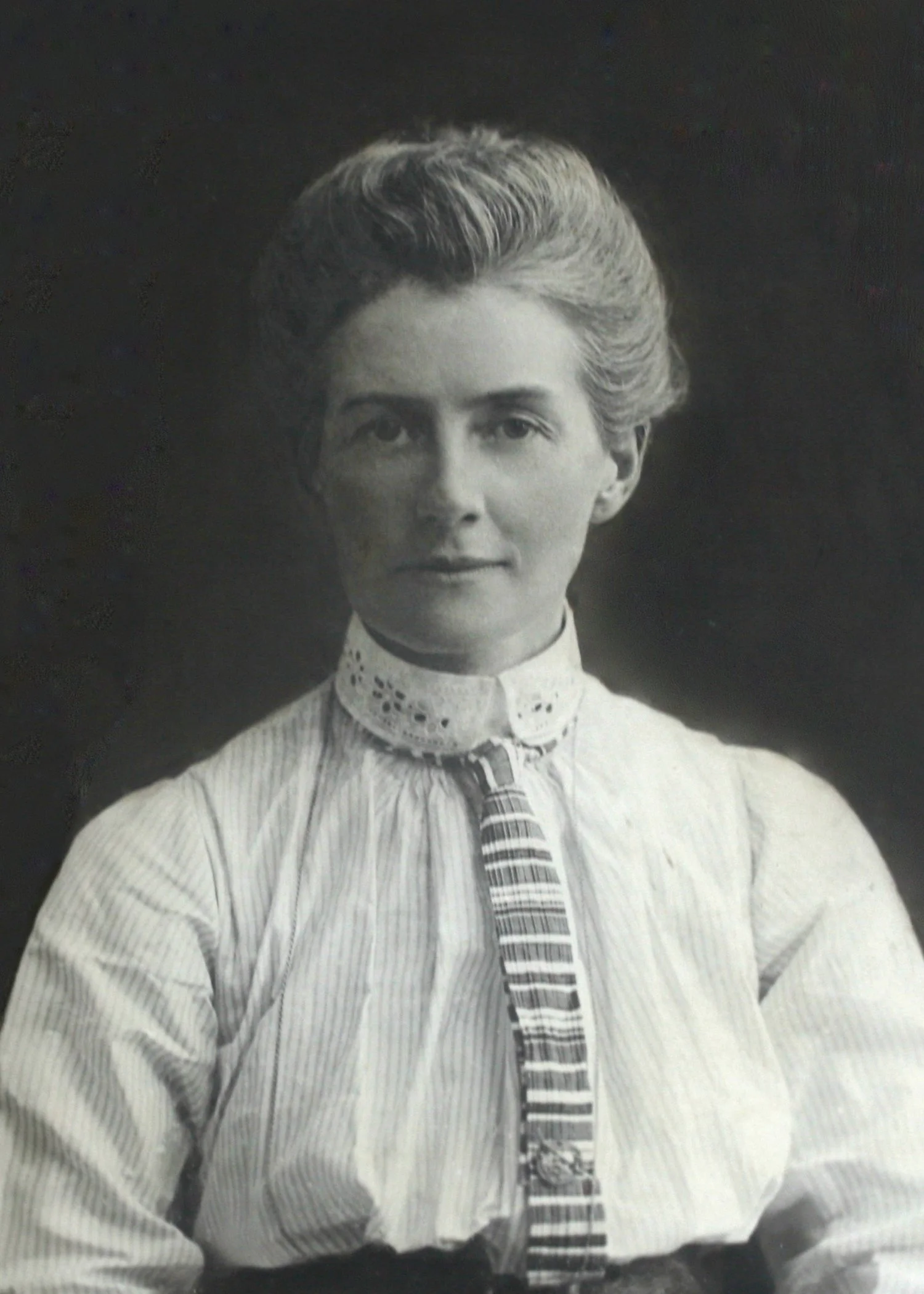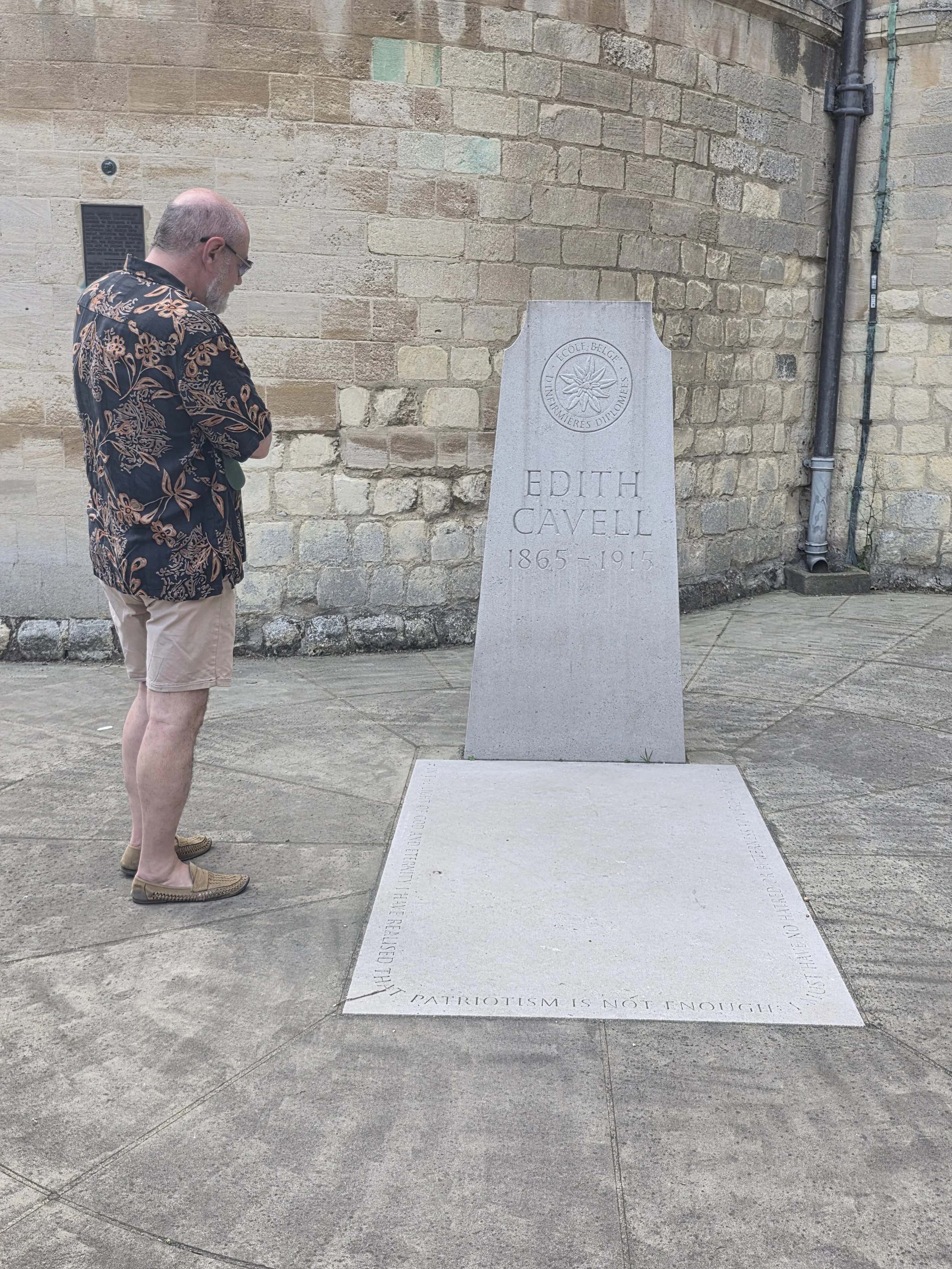
“Patriotism is not enough. I must have no hatred or bitterness towards anyone.”
These were the final words of Edith Cavell on the night before her execution by German firing squad in occupied Brussels on 12 October 1915.
Edith Cavell. We’ve all heard of her, seen wards, departments and even hospitals named after her. But who was she?
I was born in the Edith Cavell Ward at the old King George Hospital in Newbury Park, Ilford. It’s now a block of flats. Decades later (too many to name!), standing before her simple memorial stone at Norwich Cathedral, with that famous quote carved around its base, the personal connection felt suddenly alive. As a UK ENT surgeon and writer of historical WWII fiction, her story now resonates with me on medical, personal, and historical levels.
A Pioneering Nurse
Born in 1865 in Swardeston, Norfolk, the daughter of a vicar, Edith Cavell trained as a nurse at the London Hospital. In 1907 she became matron of the Berkendael Medical Institute in Brussels, Belgium’s first secular nursing school. She transformed nursing there, introducing professional training, hygiene standards, and evidence-based care at a time when it was still largely the domain of religious orders.
War and Moral Courage
When Germany invaded Belgium in 1914, Cavell stayed. Her hospital treated wounded soldiers from both sides—German and Allied alike. But she also helped organise an underground network that smuggled over 200 British, French, and Belgian soldiers to neutral Holland. Arrested in August 1915, she made no attempt to deny the charges. Tried under German military law for “war treason,” she was sentenced to death despite international appeals. She faced the firing squad at dawn, aged 49.
Her final conversation with the British chaplain contained the words that have defined her legacy.
A Surgeon’s Perspective
As an ENT surgeon, I’m struck by the ethical tension Cavell embodied. In wartime, a clinician’s duty is to the patient before them, regardless of nationality. She lived this principle under occupation, caring impartially while refusing to abandon a wider moral responsibility. Her story raises questions that still matter: Where does humanitarian duty end and resistance begin? What does “first, do no harm” mean when the state itself is the source of harm?
Echoes in WWII Fiction
As someone who writes historical fiction set in the Second World War, I see clear parallels. The escape networks she supported in 1914–18 foreshadow the resistance movements of 1939–45. The moral dilemmas, the undeclared heroism of ordinary people, and the propaganda power of her death all feel deeply familiar. Yet her insistence on having “no hatred or bitterness” remains a powerful rebuke to the tribalism of any era.
Why She Still Matters
After the war, Cavell’s body was repatriated with full honours.
Standing at her grave at Norwich Cathedral on Life’s Green, I reflected on how many patients and staff have passed through “Edith Cavell” wards in Britain over the decades. Her name above the doors honours what she stood for—the professionalism of her nursing and her compassionate courage. In an age still scarred by conflict, her words feel as necessary as ever.
If you’re near Norwich, visit her memorial. And if you were ever born, treated, or worked in an Edith Cavell Ward, know that her quiet legacy of humanity under pressure still endures.
Further reading:
Adam C Frosh is the Author of The Ghetto, a story of forbidden love and real heroes in the Warsaw Ghetto.
Imperial War Museums, British Red Cross, and Norwich Cathedral pages on Edith Cavell. Diana Souhami’s biography is excellent.
I’d love to hear from readers with their own connections to her story.