What is the Secret the Lithuanian Government Doesn’t Want You to Know About?
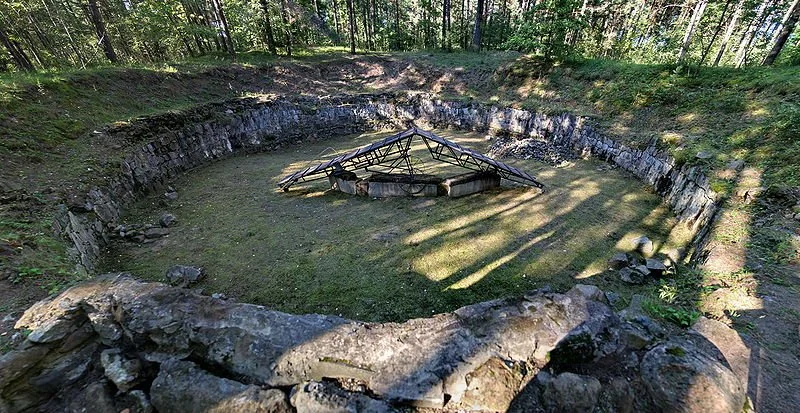
Death pit in the Ponary Forest, Lithuania
What is the Secret the Lithuanian Government Doesn’t Want You to Know About?
The time was The Second World War, the setting Nazi occupied Europe.
The question to be answered is: Why was the treatment of Jews during the early period of the German occupations worse in Eastern than Western European countries?
Almost 95% of pre-war Lithuania’s 220,000 Jews perished in World War II. Moreover, they were almost all murdered within a 6 month period from the Summer of 1941.
Horrifyingly, in June, 1941, a large proportion of the Lithuanian people welcomed the German invasion. For many, they saw the Germans as great liberators, saving them from the strict collectivist rule of Soviet occupation.
The fate of Lithuania’s Jews during the early period of Nazi occupation is a tragedy beyond comprehension.
The cruel treatment of Jews by the hands of the German occupiers is undisputed. Where the water is more murky, however, is when we study the treatment of Jews by the indigenous Lithuanians of the time.
In all occupied countries, the German administration coerced the people to help round up Jews. Failure to cooperate would risk execution and the deaths of their relatives. The Jews of Lithuania, Latvia, Belarus and Ukraine were slaughtered at an early stage.
In contrast, the collaboration in the systematic degradation, torture and murder of Jews by the non-Jewish people of France and Scandinavia was much less significant.
Why this difference?
The Slaughter on an Industrial Scale Started Even Before the Death Camps
Most of the death camps, including Auschwitz Birkenau, were not active until 1942. Therefore, at the beginning of the war, the deportation of Jews for mass slaughter was not yet an option. The preferred methods of slaughter at the early stages of the war was delivered by the Einsatzgruppen. They were essentially a group of death squads that included the Waffen SS, Order Police, Wehrmacht, local nationalist forces and collaborators. The latter (ie local people) helped to identify and find victims as well as kill them.
Just one example of the group’s work happened over a two day period in September 1941. A small detachment of Einsatzgruppe C along with larger units of Waffen SS, Order Police and Ukrainian auxiliaries shot 33,771 Jews in Babi Yar, Kiev. It is well recorded that many of the killers and victims knew one another as neighbours and colleagues.